

SpaceX Rocket Debris Believed to Have Crashed Into Moon
A discarded SpaceX rocket stage may have ended its journey in an unexpected place: the Moon. The four-tonne section of a Falcon 9 rocket had drifted through space since January 2025. Now, astronomers believe the hardware may have struck the lunar surface at thousands of miles per hour.
The rocket section measured roughly the height of a five-story building. It formed part of a Falcon 9 mission that carried two commercial lunar landers toward the Moon. The launch involved America’s Firefly Aerospace and Japan’s ispace.
A Rocket Stage on a Collision Course
The rocket stage reportedly reached the Moon on Wednesday at about 6:35 a.m. BST. Scientists estimated an impact speed of around 5,400 mph (8,690 km/h). Such a collision could create a fresh crater and send lunar dust and rocks flying across the surface.
NASA estimated that the impact could produce a crater around 60 feet wide and 12 feet deep. The collision could also create a long cloud of lunar material. Sunlight might illuminate that dust, but observers on Earth would still struggle to see it without advanced equipment.
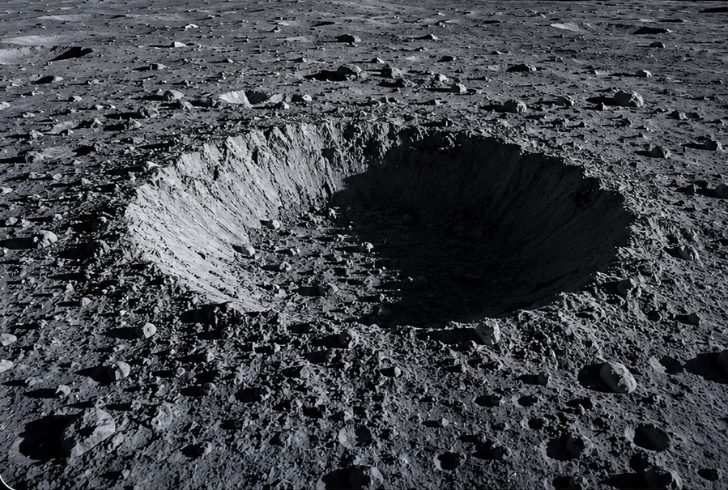
Instagram | @mindwired.ai | A high-speed rocket stage struck the Moon on Wednesday at 5,400 mph, scattering rocks across the surface.
However, astronomers could not immediately confirm the crash. Professional and amateur observers used powerful telescopes and cameras, yet the possible impact site sat close to the Moon’s visible edge. That position made direct observation especially difficult.
Scientists now expect lunar spacecraft from the United States and South Korea to capture images of the area. Those photographs could take several days to reach researchers.
NASA spokesperson Jimi Russell said the event poses no threat to Earth. He also explained that NASA scientists want to collect information from the impact and improve methods for tracking objects moving through space.
Why Did the Rocket Drift Toward the Moon?
Rocket stages usually follow a different path after completing their main job. Many return through Earth’s atmosphere and burn up. Others fall into the ocean. The Falcon 9 stage faced a different situation because the January 2025 mission needed additional thrust to send its payload toward the Moon.
Therefore, the second stage remained in space after separating from the mission’s lunar landers. The stage had already released its remaining fuel, so SpaceX could not steer it toward a new destination.
Astronomers eventually noticed that solar activity and gravitational forces had pushed the object onto a trajectory that could intersect with the Moon.
Julianna Scheiman, SpaceX’s director of NASA science and Dragon spacecraft programs, explained that the stage reached its lunar path through a combination of solar effects and gravity. Those forces can gradually alter an object’s movement through space, especially when the object has no active propulsion.
Scientists See a Small Research Opportunity
The possible crash also raises questions about space junk. Bill Gray, who created widely used astronomy software, said the event could offer limited scientific value. Researchers might learn from how human-made hardware interacts with the lunar surface.
Still, Gray also raised concerns about the handling of abandoned space hardware. Earth’s orbit already contains thousands of inactive satellites, rocket parts, and other debris. Those objects can create problems for active spacecraft and satellites.
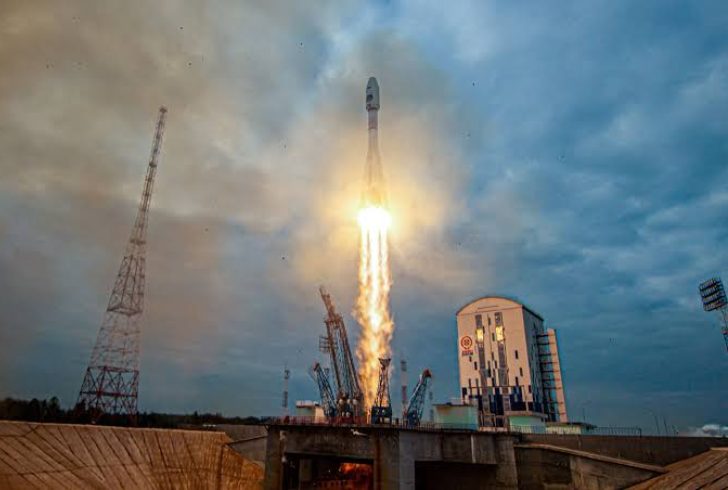
Instagram | @rap | Recent lunar missions faced setbacks as Luna-25, Chandrayaan-2, and Beresheet struggled to complete their Moon landings.
Human-made impacts on the Moon remain far less common. During the 20th-century space race, American and Soviet spacecraft reached the lunar surface through both planned and accidental crashes. NASA also deliberately sent a rocket stage into the Moon in 2009 to study the resulting dust plume.
More recently, a Chinese rocket stage struck the Moon in 2022 after completing a lunar test mission.
Recent Lunar Missions Also Faced Setbacks
Several missions have also failed during attempts at controlled lunar landings. Russia’s Luna-25 crashed in 2023, while India’s Chandrayaan-2 lander lost contact during its 2019 landing attempt.
Israel’s Beresheet lander suffered a similar fate in 2019. Its cargo included tiny tardigrades, microscopic creatures known for their ability to survive extreme conditions. Scientists have debated whether those organisms could have survived the crash and remained on the lunar surface.
The recent SpaceX event adds another unusual chapter to that history. NASA and SpaceX have discussed ways to reduce the likelihood of future rocket stages unintentionally reaching the Moon.
The Falcon 9 launch carried two lunar landers in January 2025. Firefly Aerospace built Blue Ghost, which successfully reached the Moon’s northeastern near side. The lander then conducted several scientific tasks, including lunar soil analysis.
The second spacecraft came from the Japanese company ispace. Its two-meter lander carried a small rover, but the spacecraft crashed during its final descent.
Meanwhile, SpaceX faced attention on Earth for another reason. The company reported stronger-than-expected revenue in its first quarterly report as a public company. However, investors remained concerned about its long-term plans, and the company’s shares fell despite the revenue increase.
More in Latest News
-
`
 Teófimo López Faces Rolly Romero After Years of Friendship and Sparring
Teófimo López and Rolando “Rolly” Romero once shared a friendship built through amateur boxing, Las Vegas sparring sessions and years of...
September 6, 2026 -
`
Jeremiah Smith Is Already College Football’s Best. Now He’s Learning How to Get Better
Jeremiah Smith has spent two seasons making difficult football look strangely simple. The Ohio State wide receiver can overpower defensive backs,...
September 6, 2026 -
`
D23 Disney Pins Draw Dedicated Collectors From Across the Country
Disney pin collecting has grown into a serious hobby, and D23 gives dedicated fans another reason to chase rare designs each...
September 3, 2026 -
`
Ben Simmons Training With Australian Boomers Sparks NBA Buzz
Ben Simmons is back on a basketball court with some of Australia’s top players, and the footage has quickly caught fans’...
August 30, 2026 -
`
Former Boxer Prichard Colón Dies 11 Years After Devastating Brain Injury
Former professional boxer Prichard Colón has died at age 33, nearly 11 years after a devastating brain injury changed his life...
August 30, 2026 -
`
Mike Vrabel Responds to New NFL Rule After Viral Flag Throw
Mike Vrabel made his return to the New England Patriots sideline Thursday night, and one second-quarter play quickly became the talk...
August 27, 2026 -
`
Odell Beckham Jr. Turns Heads at Giants Camp, Cites LeBron James for His NFL Comeback
Odell Beckham Jr. is back with the New York Giants, but nostalgia will not guarantee him a roster spot. The 33-year-old...
August 22, 2026 -
`
Ben Shalom Clashes With talkSPORT Host Over Zuffa Boxing
Zuffa Boxing is already creating tension in professional boxing, with BOXXER promoter Ben Shalom openly challenging the promotion’s growing influence. The...
August 21, 2026 -
`
Browns Lock Up Grant Delpit With $48M Extension as Cleveland Doubles Down on Defense
The Cleveland Browns have made another major investment in their defense. The team has signed veteran safety Grant Delpit to a...
August 15, 2026









More From Refinance Gold
-
D’Angelo Russell Signs With Shanghai Sharks After NBA Career Ends With Grizzlies Waiver
D’Angelo Russell is taking his game to China after spending more than a decade in the NBA. The former All-Star guard...
BasketballOctober 16, 2026 -
KATSEYE Opens Up About Its Rise to Global Fame in “WILD HEARTS”
KATSEYE is giving EYEKONS a closer look at the journey behind its growing global profile and growing influence worldwide. The new...
UncategorizedOctober 15, 2026 -
Dana White Gets Loudly Booed Even After Missing Joshua vs. Fury Presser
Tyson Fury and Anthony Joshua revived their rivalry on Sept. 30, 2026, during a press event for their Netflix fight card....
BoxingOctober 15, 2026 -
Jeff Bezos’ $800M Superyacht Has Arrived in Auckland
Jeff Bezos’ superyacht Koru has reached Auckland, drawing attention as it entered the city’s waterfront. The 127-meter vessel passed Rangitoto before...
UncategorizedOctober 15, 2026 -
New Study Links Insomnia to Higher Risks of Dementia and Stroke
Sleep problems may affect more than energy levels. New research connects insomnia with higher risks of stroke and cognitive decline, highlighting...
UncategorizedOctober 15, 2026





You must be logged in to post a comment Login