
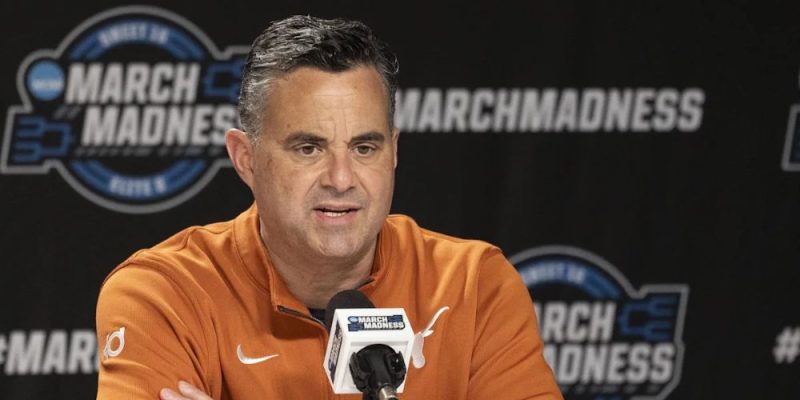
Sean Miller Shares His View on the State of NIL in College Basketball
College basketball is moving through a financial shift that is reshaping roster building, recruiting, and competitive balance. Money flowing through Name, Image, and Likeness deals has pushed programs into a new era where team construction often mirrors professional sports budgets.
Alongside the transfer portal and ongoing changes around tournament expansion discussions, the sport now looks very different from what it was just a few seasons ago.
Texas Longhorns head coach Sean Miller recently offered a candid look at where things stand, pointing to a rapid rise in spending that now defines top-tier programs.
NIL Spending Climbs Into a New Range
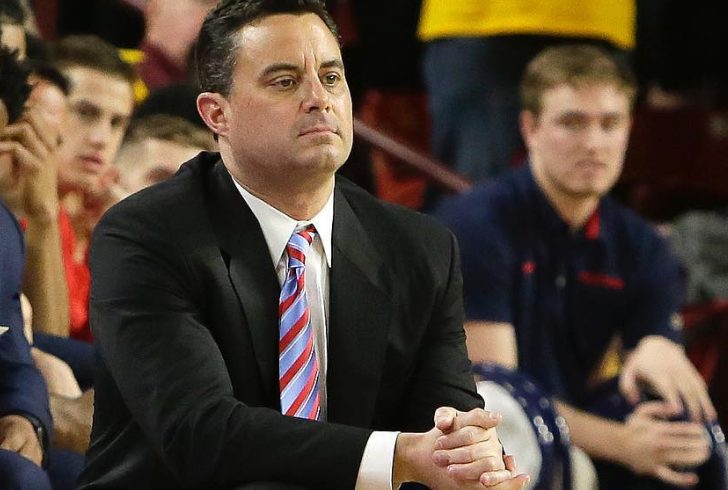
Instagram | goazcats | Sean Miller observes that program budgets have rapidly scaled to meet new NIL demands.
During an appearance on “The Field Of 68: After Dark,” Sean Miller shared an estimate that highlights how quickly the financial ceiling has moved. What once felt distant in college basketball now sits at the center of roster competition, with some programs reportedly reaching massive NIL-backed budgets.
Miller offered a direct assessment of how many teams may already be operating at elite financial levels. He stated, “Educated guess — sometimes you don’t have all the information. How many of [$20 million]? I would say 20 to 25,” Miller said.
That figure reflects a reality that has developed fast since NIL rules first opened the door for athlete compensation. Instead of small endorsement opportunities, NIL has become a core part of how programs attract and retain talent.
He also pointed to the ambition driving these investments, explaining, “We want to compete for the top prize in our own conference, and I think if you’re able to do that, you want to compete for the top prize in college basketball, which is a Final Four, a national championship. … There’s a lot of people in this country, from the West all the way through, that are really competing to be the best and to invest a great deal.”
Texas and the New Roster Economy
Texas has emerged as one of the programs actively working within this new financial structure. Without naming specifics, Miller indicated that only a small group of schools operate at a similar level of investment. The Longhorns are believed to be among those programs aligning budgets to match national championship expectations.
According to reporting from Pete Nakos of On3, schools such as Texas, Duke, Tennessee, and Louisville are viewed as programs approaching or surpassing the $20 million range in 2026. Others like Indiana, North Carolina, Texas A&M, UConn, and Houston remain close behind, signaling a wide competitive band at the top of the sport.
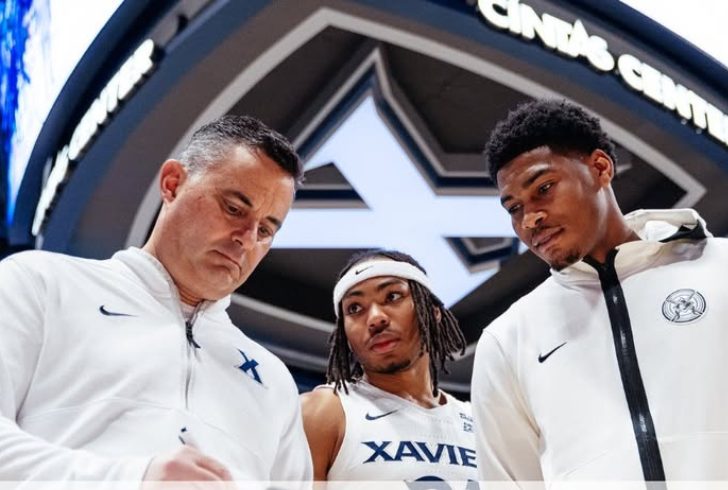
Instagram | @seanmillerpod | Sean Miller says strong coaching and player development still matter even as NIL money reshapes college basketball.
Roster construction at Texas reflects this direction. Forward David Punch arrived from TCU after a strong sophomore season, posting more than 14 points per game and earning All-Big 12 Honorable Mention. His NIL valuation sits at an estimated $1.8 million, placing him among the top 40 athletes nationally across all sports and inside the top 10 returning players in men’s college basketball.
Guard Isaiah Johnson, a transfer from Colorado, also brings significant value with a reported NIL valuation of $1.3 million. Known for his scoring ability, he ranks within the top 100 athletes nationwide under current valuation models.
Coaching Perspective in a Changing System
Even with rising costs and roster turnover through the transfer portal, Sean Miller has pointed to a consistent theme shared by high-level coaching minds. The focus remains on development, discipline, and player responsiveness within structured systems.
“All the NBA coaches that I respect … the one common theme they all end on with me is, ‘Look, the best, they want to be coached, they want to be pushed.’” Miller said.
That perspective sits alongside a reality where mid-major programs face growing challenges keeping pace with high-budget teams. The gap continues to widen as top programs secure both talent and retention advantages through NIL resources.
College basketball now operates in a financial climate where roster value, NIL investment, and transfer activity shape championship contention as much as on-court execution. Sean Miller’s observations reflect a sport adjusting to rapid economic change, with programs like Texas positioning themselves within an emerging group willing to invest heavily for elite results.
More in Basketball
-
`
 Lewis Hamilton Wins First Ferrari Race at Barcelona Grand Prix 2026
Lewis Hamilton delivered one of the defining moments of the 2026 Formula 1 season by claiming his first race victory with...
August 7, 2026 -
`
Kevon Looney Shares How Stephen Curry Shaped His Lakers Role
The Los Angeles Lakers added another experienced frontcourt player during the 2026 NBA free agency period by signing Kevon Looney to...
August 1, 2026 -
`
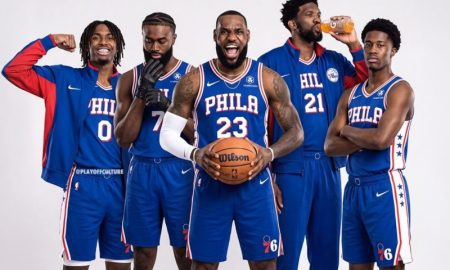
LeBron James Joins the Philadelphia 76ers for Historic 24th Season
LeBron James has made the biggest move of the 2026 NBA offseason. The NBA’s all-time leading scorer is heading to the...
August 1, 2026 -
`
Here’s the Full List of American Conference 2026 All-Conference Football Selections
The American Athletic Conference enters the 2026 season with a talented group of players across every position. The preseason All-Conference Team...
July 30, 2026 -
`
Erling Haaland Slams Excessive VAR Wait as Mbappé Misses Penalty Before Scoring France Winner
France reached another FIFA World Cup semifinal, but the biggest talking point was not the final score. Instead, attention quickly shifted...
July 26, 2026 -
`
Erling Haaland Reacts to Mbappé’s Penalty Delay in France vs Morocco
The FIFA World Cup 2026 quarterfinal between France and Morocco delivered high-quality football, but one controversial moment quickly became the biggest...
July 26, 2026 -
`
Conor McGregor Signals Interest in Floyd Mayweather Jr. Boxing Rematch
The possibility of another showdown between Conor McGregor and Floyd Mayweather Jr. has returned to the spotlight. Nearly a decade after...
July 24, 2026 -
`
Navy Leads the Way as Athlon Sports Reveals 2026 American Conference All-Conference Team
The countdown to the 2026 college football season has already begun, and Athlon Sports has added plenty of excitement with its...
July 19, 2026 -
`
ESPN Picks Only Two Alabama Players Among the Best Football Players By Jersey Number
College football’s offseason always brings a wave of rankings. Fans debate everything from uniforms and stadiums to mascots and legendary teams....
July 19, 2026




More From Refinance Gold
-
NFL Expands Global Reach in Search of the “Next 50 Million Fans”
The NFL is looking beyond the United States for its next major wave of growth. After building a highly profitable domestic...
Latest NewsSeptember 20, 2026 -
Caitlin Clark, Paige Bueckers, and Angel Reese Are Taking Team USA Global
Caitlin Clark, Paige Bueckers, and Angel Reese have spent years drawing huge crowds in American basketball. Now, three of the sport’s...
BasketballSeptember 19, 2026 -
Katie Taylor Reflects on Her Boxing Career With Gratitude
Katie Taylor reached the closing chapter of her professional boxing career on Saturday in Ireland, bringing a remarkable run to its...
BoxingSeptember 18, 2026 -
Jim Brown Statue Draws Protest Signs Over Deshaun Watson
A protest outside Cleveland Browns Stadium has put fresh attention on the team’s decision to keep Deshaun Watson as its starting...
FootballSeptember 13, 2026 -
Joey and Jesse Buss Bring Their Lakers Front Office Expertise to the Padres’ New Ownership Group
Joey and Jesse Buss are taking their experience from the Los Angeles Lakers into Major League Baseball. The sons of late...
Latest NewsSeptember 13, 2026



You must be logged in to post a comment Login