

Why Teen Basketball Now Feels Like a Pro Career Path
Teen basketball no longer sits quietly in school gyms with modest crowds and limited attention. It has grown into a high-stakes system that mirrors the professional level, complete with money, media presence, and career pressure.
Young athletes are no longer just students playing a sport. Many now operate within a structured network that blends performance, branding, and opportunity at an early age.
A clear example comes from King Bacot, who stepped into the starting lineup for Petersburg High School during a Virginia state championship game. The arena was packed, the atmosphere intense, and even the coaching staff wore matching burgundy suits. It looked and felt like a professional event.
Yet, King was only 15 years old—a freshman already navigating a space that once belonged to seasoned athletes.
Early Exposure to Fame and Business
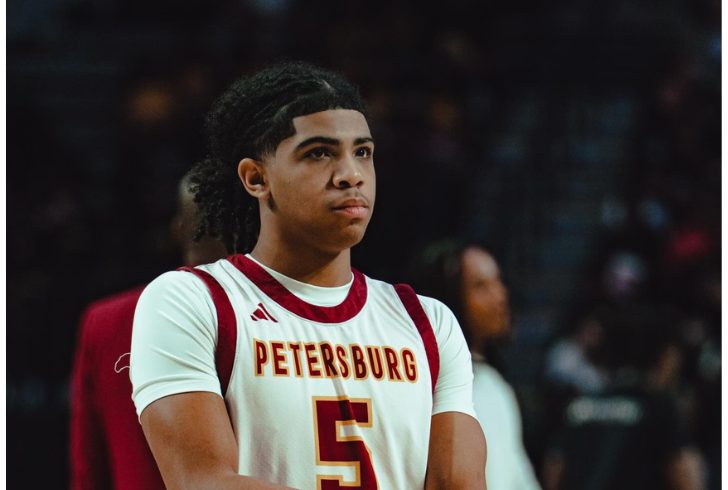
Instagram | king_bacot5 | King Bacot’s state championship start at Petersburg High felt like a pro-level spectacle in a high-stakes arena.
King Bacot’s experience highlights how quickly teenage players are introduced to national attention and commercial opportunities. He holds multiple Division I offers, works with a manager, and has built a social media following exceeding 100,000.
Endorsement discussions have already started, and his schedule includes nationwide travel for tournaments and training sessions with NBA-level coaches.
His daily routine reflects this level of commitment. Practice begins early in the morning, followed by school, then more training sessions that stretch into late evening hours. This structure leaves little room for a typical teenage lifestyle.
His mother, Joya Bacot, describes the constant demand surrounding him:
“The phone rings all the time. It could be schools, it could be brands, it could be anybody that wants King to be a part of what they got going on.”
That level of attention once belonged only to established athletes. Now, it reaches players before they even complete their first year of high school.
A Historical Shift from the Past
Petersburg High School has seen basketball greatness before. Over five decades ago, Moses Malone led the team to consecutive undefeated championships. At 19, Malone made history by signing a $3 million contract with the Utah Stars, becoming one of the first players to jump directly from high school to professional basketball.
Today, that dramatic leap has been replaced by a smoother, yet more complex path. Instead of one defining moment, young athletes now move through a series of overlapping stages that blend amateur and professional experiences.
King Bacot’s journey differs from Malone’s. During the championship game against Lake Taylor, senior standout Latrell Allmond led the team with 15 points, eight rebounds, and four blocks.
King contributed nine points while focusing on ball movement and team coordination. Some reports barely mentioned his performance. Still, his long-term trajectory remains firmly in place.
The Rise of a Professional Pipeline
The structure of basketball development has shifted over the past decade. Players once followed a clear sequence: high school, then college, followed by professional opportunities. That timeline has collapsed.
Several key changes have reshaped the system:
– College athletes can now earn money through Name, Image, and Likeness (NIL) deals.
– The NCAA transfer portal allows players to move freely between programs.
– High school athletes in many states can sign sponsorship agreements.
As a result, college basketball operates much like a professional league, with top players earning significant income. This influence trickles down to high school, where players begin building their brand earlier than ever.
Events such as the NIL Summit connect student-athletes with executives and influencers, helping them understand the business side of sports before reaching adulthood.
Movement Across Schools and States
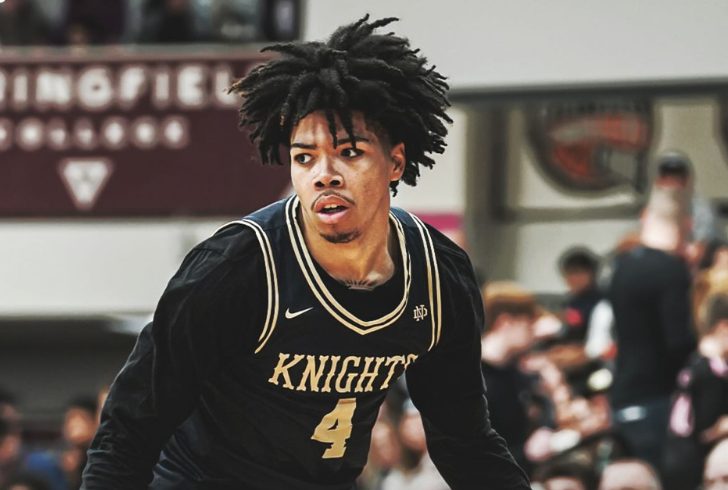
Instagram | recruitsnews | Even with three high schools in four years, Tyran Stokes’s performance keeps him at the center of the 2026 spotlight.
With increased opportunity comes constant movement. Players often transfer schools in search of better exposure, facilities, and financial benefits. In some cases, families relocate across states to secure stronger programs.
Tyran Stokes, a top prospect in the class of 2026, attended three high schools within four years while drawing intense attention from fans and analysts. His performance and college decisions are widely discussed online.
AJ Dybantsa followed a similar path, moving from Massachusetts to California and then Utah. He completed his senior year at Utah Prep, where reports indicated he earned around $600,000. Later, he joined Brigham Young University and scored 35 points in an NCAA tournament game.
This level of movement was once rare. Now, it has become part of the process for elite prospects.
Family Influence and Career Awareness
King Bacot’s older brother, Armando Bacot Jr., provides a blueprint for navigating this system. He played high school basketball in Richmond before transferring to IMG Academy in Florida. From there, he joined the University of North Carolina, where he helped lead the team to a national championship game and became the program’s all-time leading rebounder.
His success also included sponsorship deals, showing how performance and business now go hand in hand.
King grew up watching this journey unfold. His father, Armando Bacot Sr., emphasizes how the game has changed:
“It’s not just about basketball anymore. It’s about social media and marketing.”
This awareness shapes decisions early. Families now approach high school basketball with a long-term strategy that includes branding, exposure, and financial planning.
Opportunities That Don’t Reach Everyone
While top prospects benefit from this system, not every player experiences the same outcome. Many programs promise exposure and development but fail to deliver stability.
Some schools operate without proper facilities or academic structures. Reports have highlighted programs where classrooms are minimal or nonexistent, and training conditions fall below expectations.
Joseph Tipton, a recruiting reporter, explains the situation:
“Some of them don’t even have an actual building, or they’ll take classes at a different high school.”
Manvir Bhagrath, a former basketball operations director at one such school, describes the business model as exploitative. Families often pay high tuition fees in hopes of gaining visibility, while only a small number of athletes receive genuine opportunities.
He points out a key issue:
“The large majority of kids are just not going to make it professionally. It’s extremely difficult to become a professional basketball player.”
International Players Face Additional Challenges
The system also attracts international athletes, many of whom take significant risks to pursue their goals.
Yuvraj Bimwal moved from Australia to the United States after gaining attention for his performance in youth competitions. Montverde Academy, known for producing NBA talent, accepted him into its program.
However, his experience differed from expectations. He described limited access to facilities and living conditions that felt restrictive. According to him, only top-tier players received premium treatment.
“If you were on the national team, you got treated like royalty,” he said. “If you weren’t, it was just like, ‘Thanks for checking in.’”
After transferring to another school, he faced visa complications that forced him to return to Australia temporarily. Eventually, he resumed his career in the U.S. and now plays college basketball while aiming for a Division I transfer.
His journey reflects the uncertainty many players face when entering this system from abroad.
The Emotional Cost of Early Pressure
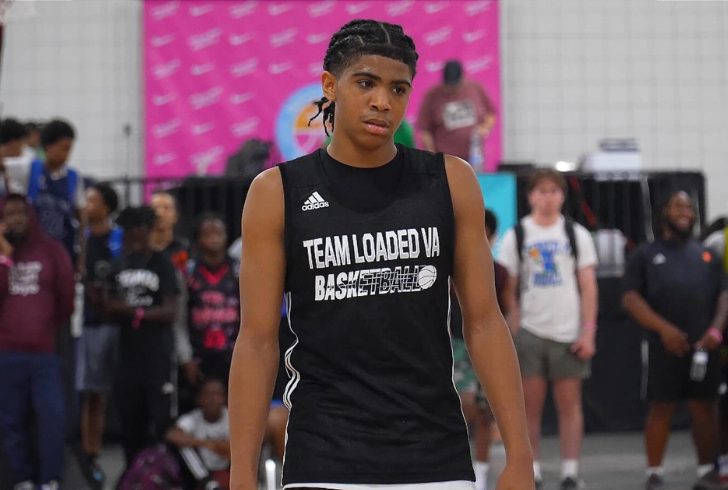
Instagram | hoopcityfilms | King Bacot’s story reveals the heavy emotional toll on teen athletes balancing high-stakes sports with personal tragedy.
Behind the exposure and opportunity lies a demanding schedule and emotional strain. Teen athletes often balance intense training, academic responsibilities, and public expectations.
King Bacot’s experience highlights this reality. After losing a close friend in a tragic accident, he attended the funeral on a Tuesday. By Friday, he was on a flight to California for a basketball camp.
His father later admitted the decision felt wrong, recognizing the emotional weight placed on a teenager already under pressure.
King’s schedule continues without pause. After winning the state championship, he quickly transitions into AAU competitions that run through the summer.
His mother has expressed concern about the pace:
“He’s tired. Like any teenager, he needs a break.”
Still, the competitive environment makes it difficult to slow down. Many players feel they must keep moving to maintain their position.
Teen basketball has shifted into a system that closely mirrors professional sports. Young athletes manage schedules, contracts, and public attention long before adulthood. Opportunities have expanded, allowing players to earn money and gain exposure earlier than ever. At the same time, the path has become more demanding and uncertain.
For every success story, many others face instability, financial strain, or unmet expectations. The journey now requires careful decisions, strong support systems, and a clear understanding of the risks involved. As the structure continues to evolve, one fact remains clear: teenage basketball is no longer just a game played after school. It has become a serious pursuit shaped by ambition, business, and constant competition.
More in Basketball
-
`
 Ryan Garcia vs. Conor Benn Fight in Doubt After Zuffa Boxing Legal Dispute
A highly anticipated boxing matchup between Ryan Garcia and Conor Benn has encountered a significant obstacle before an official announcement could...
June 25, 2026 -
`
Iowa State Exploring Position Switch for 2027 QB Blake Moser
Iowa State football carried strong momentum out of its first official visit weekend, adding three more commitments to the 2027 recruiting...
June 21, 2026 -
`
A Closer Look at the 2027 College Football Hall of Fame Ballot
The 2027 College Football Hall of Fame ballot has arrived, and it is already creating heated discussions across the sport. Every...
June 21, 2026 -
`
The Biggest Fantasy Basketball Questions Still Unanswered for 2026-27
The 2026 NBA Draft is approaching, and free agency is right around the corner. Yet many of the biggest fantasy basketball...
June 21, 2026 -
`
Doctors Once Advised Jak Corrie to Retire – Now He’s Chasing a WBA Belt
A boxing career once placed on hold by a troubling medical opinion has now brought Jak Corrie to the edge of...
June 14, 2026 -
`
How Modern Boxing Films are Redefining the Underdog Story? A Closer Look
Boxing movies have always packed an emotional punch. Audiences love watching fighters climb from hardship to glory. For decades, the formula...
June 14, 2026 -
`
Titans Announce Dave McGinnis as Newest Ring of Honor Inductee
The Tennessee Titans continue to celebrate a lasting legacy after the sudden passing of Dave McGinnis. The organization now plans a...
June 12, 2026 -
`
How Indiana’s FISU Games Trip to Peru Could End NCAA Drought
Indiana basketball is heading into the offseason with a schedule that looks far different from previous years. The program’s upcoming trip...
June 7, 2026 -
`
Indiana Basketball Heads to Peru for FISU America Games with a Completely Rebuilt Roster
Indiana basketball is heading south this summer, but this is far more than a routine overseas trip. The Hoosiers will represent...
June 7, 2026




More From Refinance Gold
-
Jake Paul Responds to Critics Over Record Netflix Boxing Viewership
Jake Paul continues to face criticism over his boxing career, but the social media star turned professional boxer believes the conversation...
BoxingAugust 8, 2026 -
How the Muhammad Ali Boxing Revival Act Could Change Boxing Forever
Professional boxing could soon enter a new era. A proposed law known as the ‘Muhammad Ali Boxing Revival Act’ has become...
BoxingAugust 8, 2026 -
Lewis Hamilton Wins First Ferrari Race at Barcelona Grand Prix 2026
Lewis Hamilton delivered one of the defining moments of the 2026 Formula 1 season by claiming his first race victory with...
Latest NewsAugust 7, 2026 -
Kevon Looney Shares How Stephen Curry Shaped His Lakers Role
The Los Angeles Lakers added another experienced frontcourt player during the 2026 NBA free agency period by signing Kevon Looney to...
BasketballAugust 1, 2026 -
LeBron James Joins the Philadelphia 76ers for Historic 24th Season
LeBron James has made the biggest move of the 2026 NBA offseason. The NBA’s all-time leading scorer is heading to the...
BasketballAugust 1, 2026


You must be logged in to post a comment Login